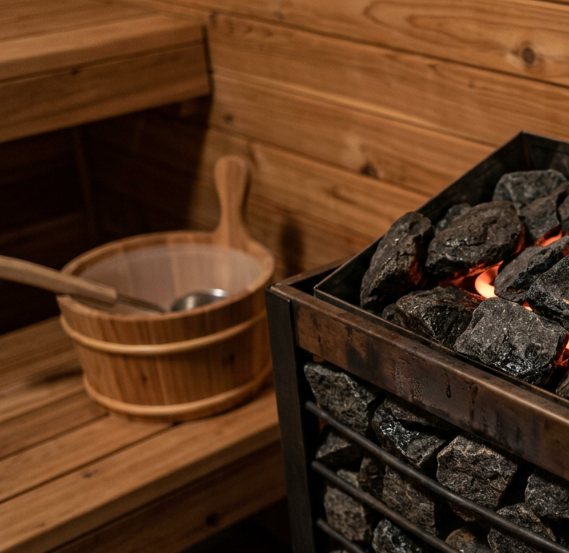
Clean a sauna heater with a dry or barely damp cloth on the metal housing, a soft brush on the stones, and plain water only on any nearby wood, never soap, oil, or household cleaner on surfaces that will be heated. In a compact 4×4 or 4×5 foot room, the heater, guard rail, and bench are close enough together that a cleaning mistake on one surface easily reaches the others, so the safest routine treats the whole heater zone as a single low-chemical area. Most maintenance is prevention: wiping down after use and letting the room fully dry beats any deep clean.
Why Wood Type Determines How You Can Clean Around a Heater
Kiln-dried cedar, hemlock, and abachi are the three woods most commonly used in small home saunas, and each is chosen specifically because it resists warping and off-gassing under repeated heat cycling when left untreated. That resistance disappears the moment an oil, stain, or scented cleaner is applied, since those products are designed to sit on the surface and will volatilize the next time the heater brings the room up to 150 to 190 degrees Fahrenheit. Plain water, applied sparingly and wiped dry immediately, is the only liquid that is reliably safe on bench wood near a heater. Anything else risks a lingering chemical smell on the next session, or in worse cases, visible discoloration where the product pooled.
What Not to Use Near the Stones and Heating Element
Vinegar, bleach, commercial descalers, and glass cleaner all show up as common mistakes in sauna maintenance forums, usually from someone trying to fix mineral buildup on the stones or a hazy film on the guard rail. All of them leave a residue that smokes or smells when the element heats back up. The stones themselves rarely need more than a dry brush to knock off loose mineral scale from hard water; peridotite and olivine stones, the two most common types sold with mid-size heaters, are porous enough that liquid cleaners soak in rather than rinse off, which makes the problem worse, not better.
A Weekly Routine That Protects Both Wood and Metal
After each session, prop the door open and let the room air out fully before wiping the bench with a dry towel; trapped moisture, not the heater itself, is what causes most wood damage over time. Once a week, wipe the heater’s metal guard and exterior with a barely damp microfiber cloth, never spraying liquid directly onto the unit, and check the stone bed for any cracked or crumbled stones that need pulling. Vacuum loose stone dust and wood debris out of the base every couple of weeks, since a buildup there can restrict airflow around the element and shorten its life.
How Often Should You Deep Clean the Heater Area?
A full stone bed refresh, replacing any cracked stones and rearranging the rest to restore even airflow, is typically an every 6 to 12 month job depending on how often the sauna gets used. The wood benches benefit from a light manual sanding once a year to remove surface buildup from sweat and skin oils, always followed by a full heat cycle with the door open to clear dust before the next session. If you are shopping for a replacement heater or stones and want specs on what a given package includes, the team at SweatDecks lists stone type and quantity on each product page, which is useful for planning ahead of a scheduled bed refresh rather than reacting after the fact.
Cleaning the Guard Rail and Digital Control Panel Safely
The guard rail around a heater collects the most dust and skin debris of anything in a small sauna, simply because it sits closest to where people sit and brush past on their way to the bench. Wipe it down with a dry cloth after every few sessions, and if it needs more than that, a barely damp cloth with nothing on it works better than any spray cleaner, since sprays tend to drip down into the stone bed below. Digital control panels and WiFi modules, common on newer heaters, should never be wiped with anything wet at all; a dry microfiber cloth is the only safe option, and any grime that does not come off with a dry wipe is better left alone than risked with moisture near the electronics.
What to Do Before a Long Break or a Cold-Season Pause
If the sauna is going to sit unused for a few weeks or more, run a full heat cycle first to drive out any residual moisture from the wood and stones, then let the room cool and air out completely with the door propped open before closing it up. Starting a heater cold after a long idle period without this step is one of the more common causes of a musty smell on the first session back, since trapped moisture in the wood has nowhere to go until the heat forces it out. A quick stone inspection before restarting regular use is also worth the two minutes it takes, since stones can shift or crack even while sitting idle.
Why Clean Equipment Matters for the Benefits You’re Actually After
The evidence behind sauna use, most of it from long-term Finnish cohort studies, tracks regular, consistent bathers, not occasional users dealing with a heater that smells or a bench that feels grimy. A Mayo Clinic Proceedings review of the evidence found associations between frequent sauna bathing and multiple positive cardiovascular outcomes, but those associations come from people who used their saunas reliably over years, which a poorly maintained unit makes less likely. A systematic review of dry sauna bathing similarly drew its findings from consistent, repeated exposure rather than sporadic use. Keeping the heater and wood in good condition is less about aesthetics and more about removing the friction that keeps people from using a sauna the way the research population actually did.
Frequently Asked Questions
Can I use soap and water to clean around a sauna heater?
A small amount of mild, unscented soap diluted in water is fine for the wood well away from the heater, but the metal housing and stone area should only be wiped with a dry or barely damp cloth to avoid mineral buildup and rust.
How often should sauna stones be replaced?
Most manufacturers recommend inspecting stones every 6 months and replacing cracked or crumbling ones immediately, with a full stone bed replacement typically needed every 1 to 2 years depending on usage frequency.
Will cleaning products damage cedar or hemlock sauna benches?
Yes, most household cleaners, oils, and stains contain chemicals that off-gas or discolor when heated, so wood surfaces near a heater should be cleaned with plain water or a sauna-specific cleaner only, never a general household product.
Why does my sauna heater smell after cleaning?
A lingering smell after cleaning is usually leftover moisture or cleaning residue on the stones, which burns off on the next heating cycle; running the heater empty for 20 to 30 minutes after cleaning typically clears it.
How do I remove mineral deposits from sauna stones?
Mineral deposits from hard water are largely cosmetic and do not need aggressive treatment; a dry brush to knock off loose scale is usually enough, since scrubbing with vinegar or descaling products can leave residue that smokes when heated.
References
- Hussain J, Cohen M. “Cardiovascular and Other Health Benefits of Sauna Bathing: A Review of the Evidence.” Mayo Clinic Proceedings, 2018. https://pubmed.ncbi.nlm.nih.gov/30077204/
- “Clinical Effects of Regular Dry Sauna Bathing: A Systematic Review.” Evidence-Based Complementary and Alternative Medicine, 2018. https://pubmed.ncbi.nlm.nih.gov/29849692/
- “Benefits and Risks of Sauna Bathing.” The American Journal of Medicine, 2001. https://pubmed.ncbi.nlm.nih.gov/11165553/
By Nicole Vance